
IICRC Water Damage Pennsylvania: How to Verify Credentials Before You Hire
Pennsylvania has no statewide water-restoration license. Learn how to check IICRC certification, HICPA registration, insurance, and red flags so a qualified local crew—not an unregistered operator—handles your emergency.
August 5, 2026 · water-damage
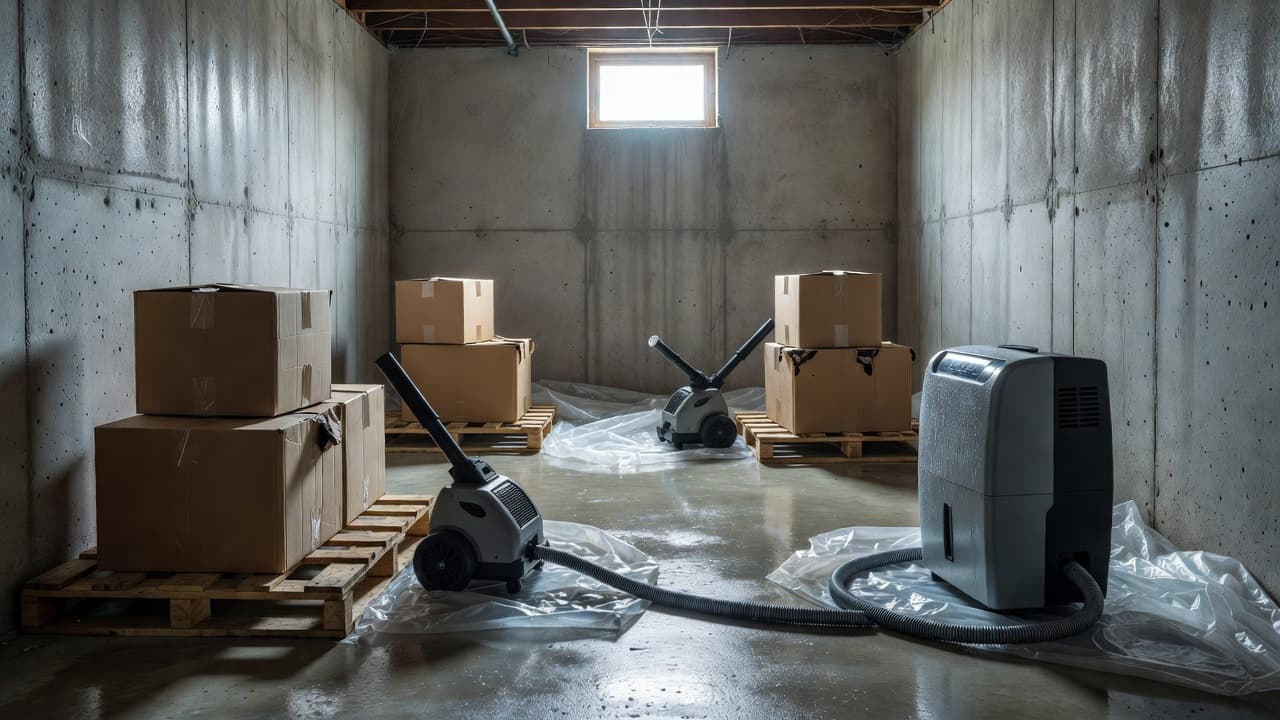
Why IICRC credentials matter when Pennsylvania has no statewide restoration license
After a burst pipe, appliance failure, or sewage backup, Pennsylvania homeowners often assume every van with “water damage” on the side is equally qualified. That assumption is risky. The Pennsylvania Department of Labor & Industry confirms there is **no statewide contractor license** required for most restoration work. There is also no dedicated state license for water damage or mold remediation.
What does exist is voluntary industry training through the Institute of Inspection, Cleaning and Restoration Certification (IICRC) and a separate registration system under the Home Improvement Consumer Protection Act (HICPA). IICRC is not a government license. It is a non-profit that develops ANSI-accredited standards—most relevantly S500 for professional water damage restoration—and certifies technicians who complete coursework and exams.
For **IICRC water damage Pennsylvania** searches, the practical takeaway is simple: certification signals that at least some technicians on the job have been trained on drying science, contamination categories, and documentation practices insurers and adjusters commonly expect. An unregistered or untrained crew may still show up fast, but incomplete drying, improper handling of Category 2 or 3 water, and missing paperwork can raise secondary damage, mold risk, and claim friction.
RestorePA helps homeowners move from panic to a verified local response. When you need emergency mitigation, start at Get Help so a qualified contractor can call you directly rather than hunting through random directories.
What IICRC WRT certification actually means (and what it does not)
The core water credential most homeowners should ask about is the **Water Damage Restoration Technician (WRT)** designation. According to IICRC, WRT covers water damage effects, extraction and drying principles, sewer backflows, and basic contamination awareness. There are no formal prerequisites; training is offered live or live-stream (including Spanish). Higher designations such as Applied Structural Drying (ASD) and Master Water Restorer build on WRT. Mold-focused credentials (for example AMRT) become relevant when microbial growth is already present—see also our overview of mold remediation.
“IICRC-certified” on a website usually means the firm employs one or more certified technicians or maintains firm recognition. It is **not**: - A Pennsylvania state license - A guarantee of insurance payment - Proof that every worker on site holds current credentials - An endorsement of pricing or outcome
It **does** indicate exposure to S500-aligned methods: moisture mapping, controlled drying, category determination, and safer handling of contaminated water. Companies market certification because adjusters often look for industry-standard procedures and drying logs.
Verify claims yourself. Use the IICRC Global Locator at iicrc.org/iicrcgloballocator/ to search firms or technicians. The locator also flags invalid use of the designation. You can report misuse to IICRC at 844-464-4272. Ask the company which specific techs will be on your job and whether their WRT (and any ASD) status is current—then cross-check the locator before work begins.
Pennsylvania’s real requirement: HICPA registration, not a skill license
While PA does not license water restorers statewide, contractors who perform (or expect to perform) **at least $5,000** in home improvement work per calendar year on private residences generally must register with the Pennsylvania Office of Attorney General under HICPA (Act 132 of 2008). “Home improvement” is broad and can include repair, remodeling, waterproofing, flooring, and related residential work. New-home construction and most pure commercial jobs fall outside typical HICPA coverage. Out-of-state contractors working in PA must still comply when the threshold and work type apply.
Registration is **not** a competency exam. It is a consumer-protection registration. Key points homeowners should know: - Registration number (often formatted like PA followed by digits) must appear in ads, estimates, proposals, and contracts. - Minimum commercial general liability proof filed with the AG: at least $50,000 personal injury **and** $50,000 property damage (many legitimate firms carry far higher limits). - Workers’ compensation when they have employees. - Written contracts required for jobs over $500, with scope, price, approximate timing, cancellation notice, AG helpline, and registration number. - Deposit limits and prohibitions on certain unfair practices apply under the Act.
Verify registration at the official search: https://hicsearch.attorneygeneral.gov/ (or related AG portals). If the site is unavailable or a result is unclear, call the AG helpline at 1-888-520-6680. Registration ≠ endorsement, but **absence** of a required number is a major red flag for operators over the annual threshold.
Also check your **municipality**. Philadelphia, Pittsburgh, and other localities may add permit or trade rules when electrical, plumbing, structural, or reconstruction work follows mitigation. Statewide guidance never replaces a local building-department call.
Immediate safety steps before any company arrives
Credentials matter only after you are safe. For active water events:
- **Stop the source if you can do so safely** — shut the fixture valve or the home’s main water shutoff. Do not enter standing water where electrical outlets, cords, or appliances may be energized.
- **Avoid contact with unknown or sewage-impacted water.** Category 2 and Category 3 water can carry bacteria and other contaminants. Keep children and pets out. Limit DIY exposure; use appropriate PPE only if you must move briefly through the area.
- **Do not run household fans alone across contaminated water** — air movement can spread aerosols and odors. Proper containment and air filtration belong with trained crews on gray or black water losses.
- **Ventilate only when it does not spread contamination** into clean rooms; when in doubt, wait for professional assessment.
- **Photograph and video everything immediately** — source, water lines on walls, saturated materials, contents, and any discoloration or odor notes with timestamps.
Sewage backups and grossly contaminated flooding need stricter controls and often disposal of porous materials. Learn more about professional response on our sewage backup service page. If mold is already visible or the loss is days old, pair water mitigation planning with mold remediation guidance.
If anyone has trouble breathing, significant exposure to sewage, or other acute symptoms, contact appropriate medical or emergency services. Restoration guidance is not medical care.
Category 1, 2, and 3 water: why the label changes the job
ANSI/IICRC S500 classifies water by **contamination of the source**, not by how many gallons you see.
- **Category 1 (clean):** Sanitary sources such as supply-line breaks, tub overflows without contaminants, or many appliance failures from clean supply. Materials are often more salvageable if drying starts quickly.
- **Category 2 (gray):** Significant contamination that may cause discomfort or illness (for example dishwasher or washing-machine discharge, toilet bowl overflow with urine but no feces, some seepage situations).
- **Category 3 (black):** Gross contamination with potential pathogens — sewage, waste-line failures beyond the trap, many rising outdoor floodwaters. Expect stricter PPE, containment, and more disposal of porous finishes and contents.
**Critical nuance:** Category can **worsen over time**. Clean water that sits, warms, and contacts building materials, soils, or microbes can deteriorate into a higher category. S500 recognizes this but does **not** publish a single universal hour count; temperature, materials, and contamination load all matter. Industry rules of thumb (act within hours, not days) are practical—not legal deadlines.
**Classes 1–4** describe how widespread and hard to dry the loss is (from minimal absorption to specialty drying of hardwood, plaster, or concrete). Class drives equipment quantity and time; category drives health controls and disposal decisions.
Ask any **certified restoration contractor PA** candidate: “How are you determining category and class on my loss? What changes if lab or IEP input is needed?” Vague answers are a warning sign. Detailed water-damage process expectations are outlined at water damage services.
Documentation that helps insurance—and what policies often exclude
Most standard homeowners policies are built around **sudden and accidental** direct physical loss from internal water events (burst pipe, sudden supply failure, certain overflows). Documentation of when you discovered the loss, what failed, and how quickly mitigation began supports that narrative.
Common friction points (general patterns, not advice on your policy): - Gradual seepage, long-term leaks, wear-and-tear, and maintenance-related moisture - Groundwater, foundation seepage, and many outdoor flood events (often flood-policy territory) - Sewer backup without a specific endorsement - Mold limitations when growth ties to delayed response or excluded water sources
Insurers and adjusters frequently look for moisture maps, drying logs, equipment placement records, and clear category determinations consistent with industry standards. Unregistered operators or crews who skip monitoring make underpayment or dispute more likely.
**Practical sequence many PA homeowners follow:** - Make the property safe and document thoroughly. - Call your insurer or agent promptly; ask about documentation expectations and any preferred-vendor rules (you still have the right to verify credentials yourself). - Arrange emergency mitigation without waiting days for an adjuster visit if water is still spreading—secondary damage escalates cost and complexity. - Keep copies of the written scope, daily humidity/moisture readings if provided, disposal records, and all invoices.
This is general education only. Coverage is policy- and fact-specific; speak with your carrier or a qualified advisor about endorsements and limits.
DIY vs. professional boundary—and when to get help now
Minor, clearly Category 1 events confined to a small hard-surface area—quickly stopped, fully accessible, and dried the same day—may be manageable with towels, a wet/dry vac rated for the water type, and airflow **if** electricity is safe and no contamination is present. Even then, hidden moisture in walls, under cabinets, or in pad and subfloor is easy to miss.
Call professionals promptly when any of the following apply: - Sewage, toilet overflow with feces, storm intrusion mixed with soil, or unknown water - Water into walls, ceilings, crawlspaces, hardwood, or large carpeted areas - Multi-room spread, Class 2–4 absorption indicators, or losses already hours to days old - Vulnerable occupants, strong odors, visible microbial growth, or suspected asbestos/lead disturbance (separate PA rules apply to those trades) - You need insurance-ready documentation and monitored drying
Unregistered or untrained crews may under-extract, skip containment on gray/black water, or declare a job “dry” without meters. That can leave you with curled flooring, microbial growth, and claim disputes weeks later.
RestorePA qualifies the emergency and routes you so a **local** contractor calls you—not a national call center reading a script. Use Get Help for water, sewage, or mold emergencies, explore water damage service details, or browse education on the blog. For city-specific context when rebuilding after mitigation, see regional pages under cities.
Homeowner verification checklist and red flags before anyone starts work
Use this checklist every time—even at 2 a.m. when you feel pressure to “just sign.”
**Documents and lookups** - HICPA registration number → confirm at https://hicsearch.attorneygeneral.gov/ or via 1-888-520-6680 - IICRC status → Global Locator for WRT/ASD (and mold credentials if relevant) - Certificate of insurance (general liability; workers’ comp if they have employees). Confirm limits and that your address can be listed as certificate holder when appropriate - Written estimate/scope describing category/class approach, equipment, monitoring, and what is demolished vs. cleaned - Written contract meeting HICPA content rules when the job and contractor fall under the Act (jobs over $500 require writing) - References for similar residential losses and proof of who is subcontracted (subs should also be properly registered when required)
**Questions to ask** - Who determines category, and what PPE/containment will you use if this is Cat 2 or 3? - What moisture meters and drying goals will you document daily? - How do you handle contents pack-out and contaminated disposal? - Will certified techs be on site, or only “available”? - What happens if drying takes longer than the first estimate?
**Red flags** - No HIC number, or refusal to let you verify it - Pressure for large cash deposits outside normal HICPA deposit norms - “Insurance always pays 100%—just sign” before any assessment - No meters, no category discussion, no written scope - Fake or expired IICRC claims that fail the locator check - Door-to-door solicitation right after a neighborhood storm with high-pressure tactics
Comparing a **water damage company license Pennsylvania** myth to reality: you are primarily verifying **registration + insurance + training**, plus local permits when reconstruction begins—not a single magic state restoration license.
When you want help routing a credential-aware local contractor instead of gambling on the first flyer, go to Get Help.
How RestorePA fits: qualified routing, not a DIY directory
RestorePA exists for Pennsylvania homeowners in active water, mold, or sewage emergencies who need a practical bridge between “something is flooding” and “a prepared local contractor is calling me.” We focus on qualification and routing so you spend less time guessing which logo is real.
We do not replace your insurer, the Attorney General’s registration database, or the IICRC locator—you should still run those checks. We do emphasize the same verification culture outlined above: trained mitigation practices aligned with industry standards, respect for HICPA consumer rules, and clear next steps on contaminated water versus clean water losses.
After mitigation, rebuild needs may involve municipal permits and additional trades. Keep your drying records; they support both construction planning and claim files. For ongoing education on prevention and recovery, visit the blog. For service-specific expectations, review water damage, sewage backup, and mold remediation.
Calm, documented, credential-checked action beats the fastest unregistered promise. Verify first, then dry thoroughly—that is how Pennsylvania homeowners protect both health and housing value after a water emergency.
Frequently asked questions
What does IICRC WRT certification mean, and how do I check a Pennsylvania water damage tech or company?
WRT (Water Damage Restoration Technician) means the individual completed IICRC training and passed an exam on water damage effects, drying principles, and basic contamination/sewer awareness. It is not a PA state license. Search the IICRC Global Locator (iicrc.org/iicrcgloballocator/) for the firm or technician name, ask which certified people will be on your job, and call IICRC at 844-464-4272 to report suspected misuse of the mark.
Does Pennsylvania require a special license for water damage or mold restoration? What is HICPA?
No dedicated statewide water or mold restoration license exists. Many residential contractors who do $5,000 or more per year in home improvement work must register with the PA Attorney General under HICPA, carry minimum liability proof, and use written contracts (with registration number) for jobs over $500. Verify at hicsearch.attorneygeneral.gov or 1-888-520-6680. Also check your city or township for extra permit rules.
What is the difference between Category 1, 2, and 3 water damage?
Per IICRC S500 concepts, Category 1 is clean/sanitary source water, Category 2 is significantly contaminated gray water, and Category 3 is grossly contaminated black water such as sewage. Category can worsen the longer water sits and contacts materials. Higher categories require stricter PPE, containment, and often more disposal. Class (1–4) separately describes how hard the structure is to dry.
Will homeowners insurance cover a burst pipe versus seepage or sewage in PA?
Many policies cover sudden and accidental internal water release (such as a burst supply line) while excluding or limiting gradual seepage, maintenance-related leaks, flood/groundwater, and sewer backup without an endorsement. Mold limits are common. Document discovery time, cause, and prompt mitigation; call your insurer early. Coverage is always policy-specific—this is general education, not a claim decision.
What red flags and documents should I demand before work starts?
Demand a verifiable HICPA number, certificate of insurance, written scope/contract, and proof of relevant IICRC technician credentials. Red flags include refusal to be verified, heavy cash-up-front pressure, guarantees that “insurance will pay everything” before assessment, no moisture equipment, and IICRC claims that do not appear on the Global Locator. If contaminated water is involved, ask specifically about containment and disposal plans.