
Combined Sewer Overflow Basement PA: Why Philly and Pittsburgh See Sewage in Heavy Rain
Heavy rain turns older PA combined sewers into basement sewage risks in Pittsburgh and Philadelphia. Learn why backups happen, Category 3 safety steps, insurance riders, and when to call pros.
August 5, 2026 · sewage
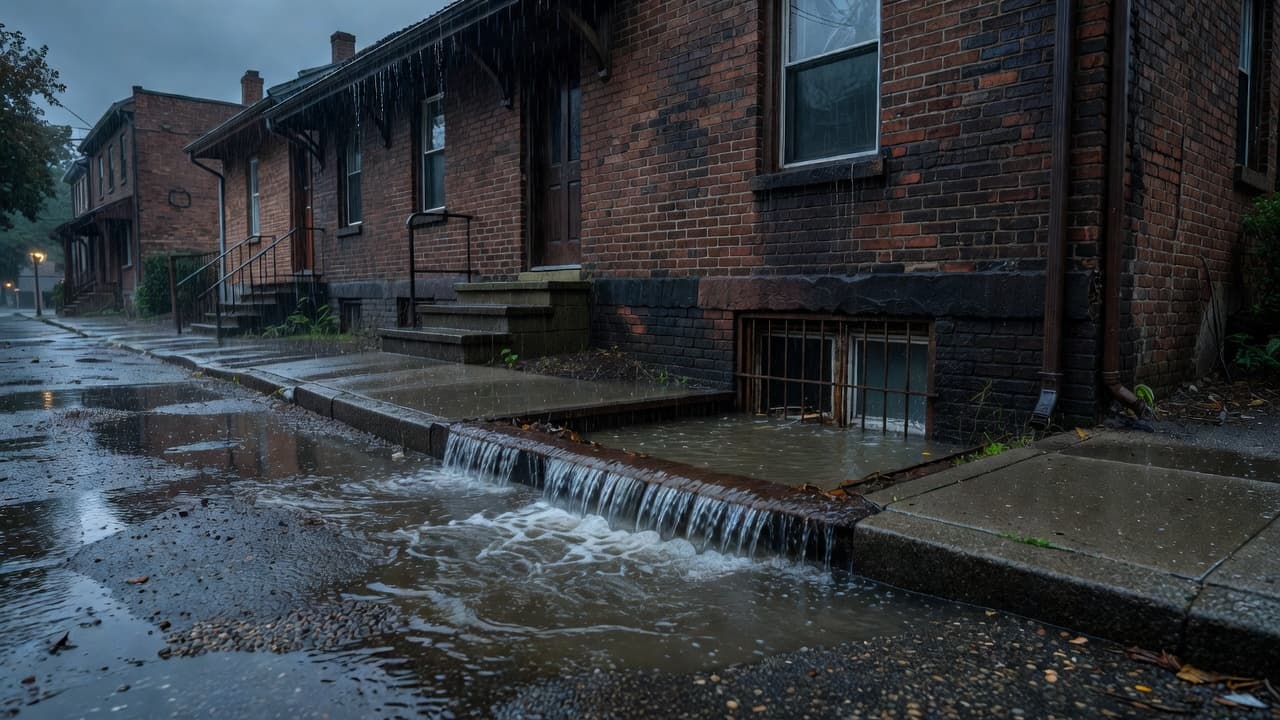
What a Combined Sewer Overflow Means for Your PA Basement
In many older Pennsylvania cities, sanitary sewage and stormwater share the same pipes—a combined sewer system (CSS). On dry days the flow reaches treatment plants. During heavy rain the system surcharges. Designed combined sewer overflows (CSOs) release mixed untreated sewage and stormwater into rivers and streams. The same pressure often forces contaminated water backward into homes through floor drains, toilets, showers, and other fixtures below grade.
Pennsylvania has long ranked among states with the largest CSO challenges—historically more than 150 permitted communities and roughly 1,500–1,900 outfalls. Philadelphia and Pittsburgh remain major examples. When the public system is overwhelmed, the lowest path for wastewater is frequently an unfinished or finished basement. That is why a strong storm can leave standing sewage even if your private plumbing was fine the day before.
RestorePA helps homeowners in these situations by qualifying the emergency and routing you so a local restoration contractor calls you directly. Learn more about the process at Get Help.
Why Pittsburgh and Philadelphia Basements Are Especially Vulnerable
Roughly 75% of Pittsburgh sits on combined sewers. ALCOSAN and local utilities manage extensive outfalls; even modest rainfall in some sewersheds has historically triggered overflows and basement backups. Combined flow can surcharge manholes or reverse into homes. Climate-driven intense storms and aging infrastructure compound the risk. Pittsburgh Water and partners continue sewer improvements plus green stormwater projects, yet heavy rain still produces Category 3 events in basements.
In Philadelphia about 60% of the city is served by combined sewers. The system averages roughly 12.7–14 billion gallons of CSO discharge per year across 164+ points. Neighborhoods with undersized or legacy creek-bed sewers—areas such as Germantown (Wingohocking), Kensington, Northern Liberties, South Philly, Center City, and West Philly—see recurring basement sewage during storms. PWD offers CSOcast mapping and the Green City, Clean Waters program. A Basement Backup Protection Program can install free backwater valves for qualifying residents who have already experienced backups.
Older industrial cities across Pennsylvania share aging laterals, inflow/infiltration, and hybrid systems that produce similar heavy-rain backups even where full CSO data is less public. Always verify your local utility map and sewershed status.
How Sewage Actually Enters the Basement
When main lines surcharge, wastewater seeks the path of least resistance. Floor drains without functional backwater protection, basement toilets, shower stalls, and laundry sinks become entry points. Private laterals damaged by roots, collapse, grease, or age can worsen or independently cause backups. Separated sewer systems can still fail from inflow/infiltration or blockages, but classic heavy-rain sewage in older PA cities is tightly linked to combined systems.
Finished basements dramatically raise cost and scope: drywall, carpet, pad, insulation, and porous contents contacted by sewage are typically removed and disposed of as biohazard material rather than simply dried. Organic load plus moisture creates ideal conditions for rapid secondary mold growth if extraction and remediation are delayed.
Immediate Safety Steps When You See Sewage
Treat any sewage backup as Category 3 “black water.” It can carry bacteria, viruses, parasites, and chemicals. Do not walk through it, and keep children and pets out.
- Document from a safe, dry vantage with photos and video of water level, entry points, and visible damage—do not wade for better shots.
- If the electrical panel is dry and accessible, shut power at the main breaker to reduce electrocution risk from submerged outlets or wiring. If the panel is wet or you are unsure, stay out and call the utility or a professional.
- If gas appliances or lines may be flooded, leave the area and contact the gas utility—do not operate switches or create sparks.
- Avoid fans that aerosolize contaminants until pros establish containment.
- Call professional restoration immediately; time matters for health protection, mold prevention, and insurance documentation.
Report the event to your local water/sewer authority (for example PWD in Philadelphia or the appropriate Pittsburgh/ALCOSAN channels) with time, rainfall notes, and any observed manhole issues. Then contact your insurer and ask specifically about sewer/drain backup coverage.
DIY Cleanup vs. Professional Category 3 Boundaries
Sewage is not a mop-and-dry project. IICRC-aligned practice requires PPE (protective suit, respirator, gloves, boots), containment to limit cross-contamination, controlled extraction, antimicrobial application, and proper disposal of porous materials. Non-porous surfaces can often be cleaned and disinfected; drywall, carpet, insulation, and many contents generally cannot be salvaged once contacted.
Attempting to “just dry it” leaves pathogens and organic residue that feed mold within 24–48 hours. Residual odor without standing water can still signal dried residue, trap issues, or lateral problems that need investigation. Professionals follow protocols that protect occupants and support insurance claims. RestorePA routes qualified sewage emergencies so local contractors experienced in sewage backup and water damage can respond—start at Get Help.
Insurance Reality: Why Most Standard Policies Exclude This
Standard homeowners policies commonly cover sudden accidental water damage such as a burst supply line, yet exclude sewer/drain backup and sump overflow. Coverage usually requires an optional endorsement—often called water backup, sewer and drain backup, or similar. Premiums and limits vary; illustrative ranges seen in the market run roughly $50–250+ per year with limits frequently $5,000–$25,000 (sometimes higher). Separate deductibles may apply.
CSO-driven heavy-rain backups are typically treated as sewer backup events. Gradual seepage, long-term maintenance neglect, or flood (NFIP) are often excluded or handled differently. Document thoroughly, report promptly, and preserve evidence. Municipal claims are sometimes explored but face governmental immunity hurdles; success is never guaranteed and legal advice should come from an attorney. Pennsylvania Insurance Department guidance consistently urges homeowners to verify whether they carry backup coverage. Check your declarations page before the next storm.
Documentation That Helps Your Claim and Utility Report
Strong documentation starts the moment it is safe:
- Timestamped photos/video of water source, height, affected rooms, and contents.
- Notes on rainfall intensity, start time, and whether neighbors or street manholes were also affected.
- Utility report confirmation number and any prior backup history.
- Inventory of damaged items with approximate ages/values.
- Communication log with insurer and restoration company.
Do not discard materials until the adjuster or your contractor advises, unless they create an immediate safety hazard. Professional restoration reports that detail Category 3 protocols, moisture readings, and materials removed strengthen the file. For mold that appears after delay, pair sewage cleanup with proper mold remediation assessment.
Prevention Steps PA Homeowners Often Miss
Backwater (backflow) valves on the building sewer lateral stop reverse flow when the public system surcharges. Philadelphia’s Basement Backup Protection Program offers free installation for qualifying residents with prior backups—contact PWD. Elsewhere, discuss valve options with a licensed plumber and confirm local code and maintenance needs.
Keep private laterals clear: never flush wipes or pour grease. Maintain traps by pouring water periodically so seals do not dry out. Consider a battery-backup sump if groundwater is also a factor. Know whether your address sits in a combined sewershed (utility maps and CSOcast-style tools help). Green infrastructure and public system upgrades reduce frequency over time but do not eliminate the need for private protections today.
After any event, professional extraction, porous-material removal, antimicrobial treatment, structural drying, and follow-up moisture/mold checks are the reliable path back to a safe home. Explore local context for Pittsburgh-area homeowners at Pittsburgh and related guidance on the blog.
When to Get Help and What RestorePA Does
Call for professional help as soon as you identify sewage or suspect a CSO-related backup—especially if water is still entering, electrical/gas hazards exist, the basement is finished, or anyone in the household is immunocompromised. Waiting multiplies mold risk and claim complications.
RestorePA is not a DIY directory. We qualify Pennsylvania homeowners facing water, mold, or sewage emergencies and route the lead so a local contractor calls you. That keeps the focus on rapid Category 3 response rather than phone-tag. If you are dealing with a basement sewage event after heavy rain in Pittsburgh, Philadelphia, or similar older PA cities, start at Get Help or review sewage backup services. Calm, documented action protects health and property far better than waiting for the next storm.
Frequently asked questions
Why does heavy rain put sewage in basements in Philly and Pittsburgh but not everywhere?
Large portions of those cities still use combined sewers that carry both sewage and stormwater. Heavy rain overwhelms capacity, causing designed overflows to waterways and reverse pressure into homes via below-grade drains and fixtures. Areas with fully separated systems are less prone to this classic CSO-driven backup, though they can still fail from blockages or infiltration.
Is sewage backup covered by regular homeowners insurance in Pennsylvania?
Usually not. Standard policies often exclude sewer and drain backup. You typically need an optional endorsement with its own limits and sometimes a separate deductible. Limits commonly fall in the $5k–$25k range but vary—always check your policy declarations and ask your agent before the next storm.
Is it safe to clean a sewage backup myself?
No. Sewage is Category 3 black water containing pathogens. It requires PPE, containment, proper disposal of porous materials, and antimicrobial treatment. DIY drying leaves contamination and raises mold risk within 24–48 hours. Hire professionals experienced in Category 3 protocols.
Can Philadelphia install a free backwater valve, and what about other PA cities?
PWD’s Basement Backup Protection Program can provide free backwater valve installation for qualifying residents who have already had backups—contact PWD to check eligibility. Other municipalities may have different programs or none; a licensed plumber can evaluate valve options and local requirements anywhere in PA.
How fast does mold grow after a sewage backup and what usually gets torn out?
Mold can begin colonizing within 24–48 hours in moist, organic-rich conditions. Porous materials touched by sewage—drywall, carpet, padding, insulation, and many contents—are generally removed and discarded as biohazard. Non-porous surfaces can often be cleaned and disinfected after professional extraction and drying.