
Basement Flooding Central PA: Post-Storm Checklist for Lancaster, York & Harrisburg
After a Central PA summer storm dumps water into your basement, the next 24–48 hours decide mold risk and insurance outcomes. Use this Lancaster–York–Harrisburg checklist for safety, extraction, documentation, and when to call pros.
August 5, 2026 · seasonal
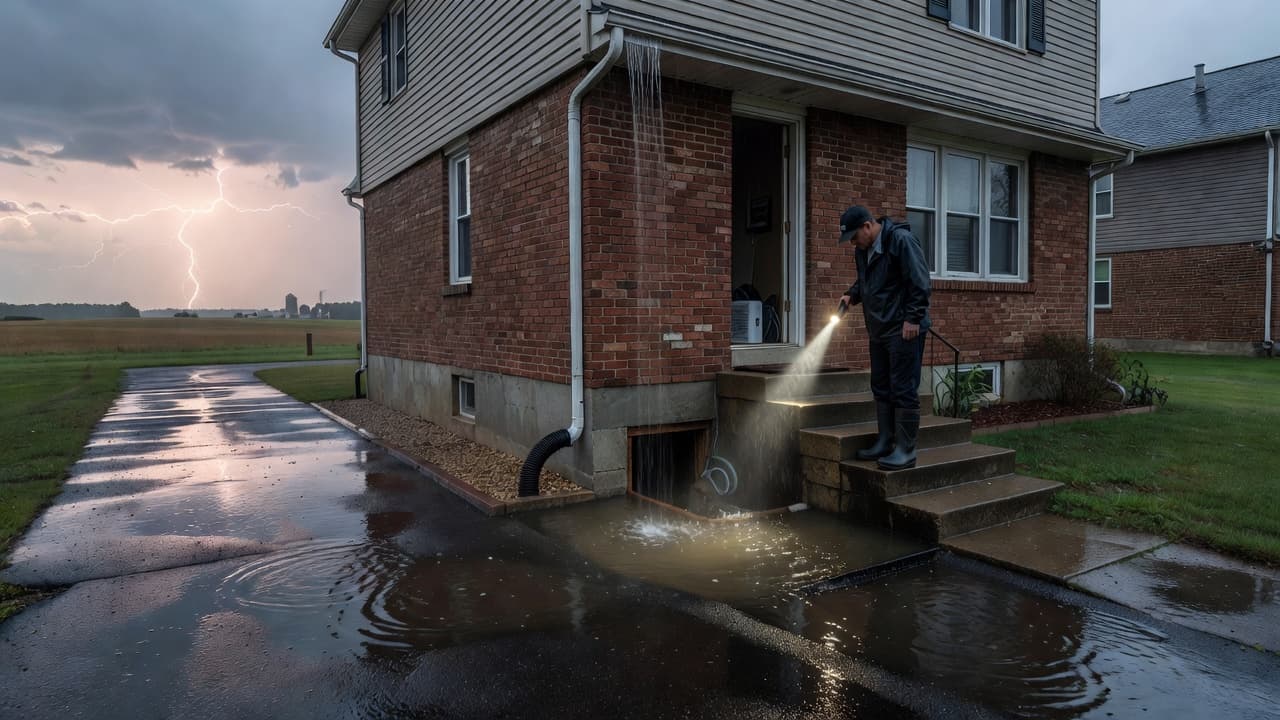
Why basement flooding hits Central PA hard after summer storms
Central Pennsylvania—especially Lancaster, York, and the Harrisburg/Dauphin corridor—regularly sees intense summer thunderstorms that drop several inches of rain in a short window. Clay-heavy soils saturate quickly, drainage systems back up, and surface water finds the path of least resistance: window wells, foundation cracks, garage thresholds, and failed or overwhelmed sump pumps.
Flash-flood emergencies have been declared in Lancaster and nearby counties in recent storm cycles, and historic events such as Tropical Storm Lee showed how Susquehanna-driven water can affect the broader Harrisburg region. Even homes outside mapped floodplains are at risk; Pennsylvania Insurance Department guidance notes that a large share of flood claims historically occur outside high-risk zones.
For homeowners, the practical issue is not only the water you see. Standing water mixed with soil, organics, or sewer surcharge often shifts from relatively clean rainwater toward higher contamination categories. At the same time, humid Northeast summers accelerate mold germination on wet drywall, carpet pad, and framing. Understanding that dual pressure—contamination plus the mold clock—is the reason a calm, ordered checklist matters more than frantic mopping.
Immediate safety steps before you step into standing water
Treat electrical hazard as non-negotiable. Do not enter a flooded basement until power is confirmed off at the main breaker or disconnected by the utility. Water plus outlets, appliances, or submerged cords creates electrocution risk. If you cannot safely reach the panel, call the utility. Have a qualified electrician inspect systems before restoring power.
Check for gas odors. If you smell gas or suspect a leak, leave and follow your utility’s emergency instructions. For water that may be Category 2 or 3 (gray or black water—sewage, river/stream intrusion, or stormwater heavily mixed with soil and contaminants), avoid skin contact. Use gloves, boots, eye protection, and at least an N95-style respirator. Keep children, older adults, and anyone immunocompromised out of the area.
Do not run household vacuums or ordinary fans across contaminated water; they can aerosolize pathogens and fine debris. If exterior ground is still saturated, avoid pumping the basement dry at extreme speed without professional assessment—rapid interior drawdown against high exterior hydrostatic pressure can stress foundation walls. Safety first, then controlled extraction.
The 24–48 hour mold clock in humid Central PA summers
Mold spores need moisture, organic material, and time. On wet porous surfaces, germination can begin within roughly 24–48 hours. Visible growth often appears in the 24–72 hour window, with more established colonies common by days three to seven if materials stay damp. Central PA summer humidity shortens the margin for error.
Highest-risk materials include carpet and pad, untreated drywall, insulation, and unfinished wood. Even if the visible water looks “just rain,” once it contacts soil, crawlspace debris, or sewer backup it can carry nutrients and microbes that favor growth. Category of water can also worsen while it stands: clean (Category 1) sources can degrade toward Category 2 or 3 after prolonged contact with building materials and bacteria multiplication.
Practical implication: extraction alone is not enough. You need continuous drying aimed at bringing indoor humidity down (many restoration programs target well under 50% relative humidity where feasible) and verifying hidden moisture in wall cavities and subfloors with proper meters. Bleach on porous moldy materials is not a substitute for removal and professional remediation when growth is established. Prompt drying protects health and also supports any insurance discussion about whether secondary damage was mitigated reasonably.
Category 1, 2, and 3 water: what storm basements often become
Restorers and many insurers reference IICRC S500 water categories because contamination level drives PPE, what can be cleaned versus discarded, and job complexity.
- **Category 1 (clean):** Sanitary sources such as supply-line breaks or clean rain before significant ground contact. Lower initial health risk; many materials remain salvageable if extracted and dried quickly. Can degrade if left standing.
- **Category 2 (gray):** Significant contamination—appliance overflows, some sump discharges, toilet bowl water with urine only, and similar. Greater illness potential; more aggressive cleaning and selective removal are common.
- **Category 3 (black):** Gross contamination—sewage, toilet waste beyond the trap, river or stream flooding, and many outdoor floodwaters once mixed with soil and pollutants. High pathogen risk; porous materials that contacted the water are usually discarded; containment and specialized remediation are standard.
Weather-related water is not automatically Category 3 in every case, but Lancaster/York/Harrisburg flash-flood basements frequently earn Category 2 or 3 classification on site because of soil, organics, or municipal surcharge mixing. When in doubt, treat unknown storm water as contaminated until a qualified restorer assesses it. That mindset protects your household while documentation is gathered.
Insurance realities in Pennsylvania: sudden interior events vs. external flooding
This is general education, not advice for your policy. Standard HO-3 homeowners policies in Pennsylvania typically address sudden and accidental water damage from interior sources (burst pipes, certain appliance failures, or rain entering through a storm-damaged roof). They generally exclude external flooding, surface water, and groundwater seepage through foundations, walls, or floors, as well as gradual or long-term leakage.
True flood damage—water from outside rising or flowing into the home—usually requires a separate flood policy (NFIP or private). Pennsylvania’s Insurance Department stresses that flooding is the state’s most common natural disaster and that coverage outside high-risk maps still matters. New NFIP policies commonly carry a waiting period (classically about 30 days).
Sewer/drain backup and sump pump failure are frequently excluded unless you purchased a specific water-backup/sump endorsement. Those endorsements often carry relatively low sublimits—verify your own declarations. NFIP basement coverage, when a flood policy applies, is limited: certain building elements and equipment (for example unfinished drywall in defined cases, furnaces, water heaters, sump pumps, essential electrical components, foundation elements, attached staircases, and covered cleanup/drying/mold treatment of covered items) may be addressed, while most personal contents and finished improvements are heavily restricted or excluded. “Basement” under NFIP means any area with the floor below ground level on all sides.
Document the source carefully. Mislabeling seepage as a covered interior event—or delaying notice—are common claim friction points. For consumer help on disputes, Pennsylvania residents can contact the PA Insurance Department (insurance.pa.gov or 1-877-881-6388). Always read your own policy language.
Documentation checklist that strengthens any claim discussion
Before you haul everything to the curb, create a clear record. Insurers and adjusters look for sudden onset, source clues, and proof that you mitigated further damage.
- Timestamped photos and video of the water line, affected rooms, and any identifiable entry point (window well, crack, failed sump, cleanout).
- Notes on date, time discovered, weather conditions, and whether municipal alerts or flash-flood warnings were active.
- Inventory of damaged contents with serial numbers where possible; photograph furnace, water heater, and panel nameplates—especially relevant if flood coverage may apply.
- Do not discard items until they are documented unless they are an immediate health hazard and you have already photographed them thoroughly.
- Keep receipts for pumps, temporary lodging, fans, or professional mitigation.
- Maintain a simple log of calls to your insurer and any restoration firm, including names and times.
Call your insurer promptly while you begin mitigation. Policies generally expect you to prevent further damage; waiting days for an adjuster before removing standing water can worsen mold and undermine the claim narrative. Professional moisture maps and drying logs often become useful exhibits later. If coverage is denied or limited, those same records help you ask precise questions or seek a second review.
DIY extraction vs. calling professionals: a practical boundary
Small, clean, shallow Category 1 incidents—quickly stopped supply water on a sealed floor—may be manageable with a wet-vac, air movement, and dehumidification if you can dry materials fully within the first day or two and verify no hidden moisture. Storm-driven basement flooding in Central PA rarely stays that simple.
Call qualified help when any of the following apply: water deeper than a minor film; suspected Category 2 or 3 contamination; sewage odor or backup; water in wall cavities or under finished flooring; HVAC or electrical involvement; structural concerns; vulnerable occupants; or simply a volume larger than consumer equipment can remove and dry. Professionals bring truck-mounted or commercial extraction, containment for contaminated jobs, air scrubbers when appropriate, moisture metering, and documentation aligned with restoration standards.
RestorePA qualifies Pennsylvania homeowners with water, mold, or sewage emergencies and routes leads so local contractors call you—rather than leaving you to cold-call a directory during a crisis. If you need that connection after a Lancaster-area storm, start at Get Help or review water damage services. For growth already visible, see mold remediation; for backups, see sewage backup.
DIY mistakes that raise cost later include using household fans on sewage, leaving pad and base drywall wet “to see if it dries,” and restoring power before inspection.
First 24 hours and the week after: a Lancaster–York–Harrisburg action plan
**Hours 0–4:** Life safety only—power/gas status, no entry into energized water, PPE if contamination is possible. Stop additional inflow if safe (close openings, temporary exterior diversion away from foundation). Photograph everything.
**Hours 4–24:** Extract standing water appropriate to category (professionals preferred for large volumes or gray/black water). Move salvageable contents to a dry zone; elevate furniture legs on blocks if pieces must stay. Notify your insurer and a restoration pro. Begin systematic drying; remove unsalvageable porous materials that are fully saturated, especially under Category 2/3 rules. Check sump pump operation and discharge path once power is safely available; clear gutters, downspouts, and window wells so the next cell does not repeat the event.
**Days 2–7:** Monitor for musty odors and discoloration daily. Keep dehumidification running until moisture readings stabilize. Track humidity. Re-inspect sill plates, lower studs, and behind baseboards. Confirm HVAC systems are clean before recirculating air through wet zones. If mold appears on porous building materials, shift from “dry it yourself” to proper remediation rather than surface wiping alone.
Localize prevention without waiting for another warning: battery backup for the sump, extended downspout discharge, maintained window-well drains, and grading that carries water away from the foundation are common Central PA best practices. For area-specific navigation, see RestorePA’s Lancaster page and additional guides on the blog.
Sump pump failure, municipal surcharge, and preventing the next storm loss
Heavy rain does not only raise creeks; it loads older municipal systems and raises the water table against basement walls. When the power blinks during a storm—common with summer cells—a sump without battery or water-powered backup can fail at the worst moment. Discharge lines that freeze in winter or clog with debris in summer create the same outcome: water that has nowhere to go except back into the pit and onto the floor.
After you stabilize the current event, test the float, clean the pit, confirm the check valve direction, and measure whether the discharge outlets far enough from the foundation. Consider alarm notification so a failure is not discovered hours later. Endorsement coverage for sump failure, if you choose to carry it, is separate from flood insurance and from standard sudden-pipe coverage—read sublimits and exclusions carefully.
None of these steps replace flood insurance where external water is the realistic risk, and none guarantee a dry basement in every flash-flood emergency. They do reduce the frequency of “avoidable” losses that insurers may view as maintenance-related. Pair mechanical upgrades with the documentation habit: if a future storm still overwhelms the system, you will again need photos, timelines, and prompt mitigation to have any productive coverage conversation.
Frequently asked questions
Does my standard Pennsylvania homeowners policy cover basement flooding from a summer thunderstorm?
Usually not if the water is external surface water, groundwater, or floodwater entering through the foundation, windows, or doors. Standard HO-3 forms more often address sudden interior plumbing or appliance failures, or rain entering through a storm-damaged roof. External flooding typically needs a separate flood policy; sewer or sump failures often need a specific endorsement. Check your declarations and call your carrier for your exact wording—this is not insurance advice.
How fast does mold grow after basement flooding in humid Central PA summers, and will insurance pay for remediation?
Spores can germinate within about 24–48 hours on wet materials; visible growth commonly follows in 24–72 hours if drying lags. Coverage for mold remediation generally depends on whether the original water event is a covered peril and whether you mitigated promptly. Mold tied to excluded floodwater or to long delays is frequently denied. Document conditions early and dry aggressively.
What is the difference between Category 1, 2, and 3 water after a Lancaster or York flash flood?
Category 1 is clean/sanitary water; Category 2 is gray water with significant contamination; Category 3 is black water such as sewage or many outdoor floodwaters mixed with soil and pathogens. Higher categories require stricter PPE, more disposal of porous materials, and specialized cleaning. Storm basements are often classified Category 2 or 3 on site even if the rain started clean.
What does NFIP flood insurance actually cover in a basement?
NFIP basement coverage is limited. It may include certain building elements, essential equipment (such as furnaces, water heaters, and sump pumps when properly installed), and cleanup/drying of covered items. Contents coverage is very restricted—most furniture, clothing, and finished improvements are not covered. Finished basement living areas have little contents protection compared with above-grade rooms. Review current NFIP basement fact sheets and your policy declarations.
What should I do in the first 24 hours after finding water in my Harrisburg-area basement?
Confirm power and gas safety before entry; document with timestamped photos; extract water appropriate to its category; start drying and remove unsalvageable wet porous materials; notify your insurer; and contact a qualified restoration professional. Do not wait for an adjuster to begin mitigation. If you want a local contractor to call you, use RestorePA’s get-help flow rather than improvising during the storm aftermath.